Friday, May 28, 2010

Why Do You Write? by Jim Ferguson

I went to a writer’s conference several weeks ago—the first conference I’ve attended in 25 years. The first session consisted of two agents and one editor who addressed what is hot in the market and some of the dos and don’ts for getting representation and submitting a proposal. While the conference sessions were filled with information to help us develop our writing skills, there seemed to be one overriding concern from many of the attendees and that was getting published—not learning the craft of writing.

That started my thinking about why I write. I thought about the books that I’ve read that have stayed with me through the years and why. They’re books that triggered my interest in a subject, produced memorable characters or told a story I can’t forget.

I read my first memorable book when I was in the 5th or 6th grade. It was called The French Foreign Legion by Wyatt Blassingame. This book created an interest in the French Foreign Legion which has taken me from the poem “Rendezous with Death” by Alan Seeger written during World War I, to the French Indochina war (1946-1954). Reading The French Foreign Legion set me on the path of a life time of studying history which foreshadowed many of the significant crises of my generation—including Vietnam, and our wars in Afghanistan and Iraq.

Finding The French Foreign Legion in my elementary school library propelled me on a course that led me to the outstanding author and one of the greatest historians--Bernard Fall.

Yes, I want to be published but I want to write something that creates in the reader a desire to learn and a desire to see more in the lives of others and in themselves.

Jim Ferguson won first place with his novel, Beginner's Luck, co-written with his wife. He is working on a nonfiction book.


Monday, May 24, 2010

An Itch You Can Scratch by James R. Tate

A recurring itch recently found its way back into my hand and arm, but I don’t think it started there. I believe it originated in my heart. If you’re a writer, you know what I’m talking about-the itch to write. No matter what happens in our lives, no matter how far we go to get away from it, the itch will find us. We’re not talking about a job, or a duty, or even a fleeting whim. What we are talking about here is a passion deeply rooted in our souls.

Now, I can speak from experience and tell you that this ‘itch’ can go dormant for long periods of time, sometimes seeming to disappear entirely, hidden behind an impenetrable wall of work, and kids, and honey-do chores around the house. But I promise you it is still there, waiting for the right moment.

What is the right moment and how will you know? I’m glad you asked. An early indication will be when you’re reading your favorite author's latest book and you begin to notice the format of the paragraph, or the number of times he or she uses the word ‘was’. You may even start to daydream about a storyline you might have used to improve the current chapter.

Another indication might come when you notice the grocery list you wrote out this morning has prose like-two pounds of bright yellow squash glistening from the morning dew, or a loaf of harvest wheat bread pounded from the grains of a thousand wheat fields, lightly buttered with the strands of hair from a roman goddess. One time, I even wrote a ten page story to remind myself to pick up the dry cleaning. I know! I know! I couldn’t help myself.

The point is, if you really, really, REALLY love to write, as I do, don’t let the itch stay gone too long. And cherish it when you have it. Life passes us by very fast. We cannot recapture time lost. If you say, “I’ll get to it when…”, you never will.

Earlier this evening I spent two hours pounding out five pages in my second novel. I was in the zone, deeply engrossed in a story running on film reels in my head. Nothing else around me—the dog scratching to go out, the neighbor playing his eighties music at a hundred and ten decibels, not even my wife coming in from the grocery store—put a dent in my zone armor. And there was one other thing I remember quite clearly.

My arm was itching like crazy.

James R. Tate is the author of Hot Rod Jones & the Mystery of Gut Shot Creek. He's published in print magazines, and is currently marketing his first full length adult novel while writing his second. His goal is the top of the heap, not the top of the slush pile.

Sunday, May 16, 2010

The Fellowship of the Round Table by Jan Rider Newman

Every time I read the legend of King Arthur and his knights, or see a movie based on it, I hope the story will turn out differently. I want Camelot to live forever, as it does in the Prince Valiant comic strip. I want Guinevere to chose Arthur. For some reason, the necessity of her finding true love and fulfillment with Lancelot instead breaks my heart. I think it’s supposed to. That’s the way the tale is written, and forever it shall be.

Several years ago I found Persia Woolley’s trilogy based on the Arthurian legends. It ended the way it had to, of course, but told a wonderful story through the eyes of Guinevere.

Child of the Northern Spring (Poseidon Press, New York, 1987) introduces us to the Celtic princess destined to be the High Queen of Britain and wife of the High King, Arthur. The girl we meet is a tomboy, no stately, elegant lady. She is lively, passionate, intelligent, and the king she marries loves her very much. Unfortunately, he is more king than husband, which is a constant in the legends. The royal couple have no children, and he isn’t a very satisfactory lover.

In the first book we also meet other key figures: Merlin, Morgan le Fey, Mordred, Gawain, and all the other knights. In this first book a united kingdom is established, and the marriage is happy if somewhat unfulfilling.

In Queen of the Summer Stars (Poseidon Press, New York, 1990), the tomboy Guinevere grows into her role as queen and wife. The grand castle of Camelot is raised, the Round Table established. Wars, adventures, and romances keep the pace breathless. And Lancelot rides onto the scene, bringing Arthur a steadfast friend and advisor and Guinevere the romance and passion her marriage is missing.

Guinevere (Poseidon Press, New York, 1991), opens with the kingdom well established. Peace reigns in Britain under the excellent leadership of Arthur and his right hand, Lancelot. Guinevere loves both men, and both love her. But even the most outstanding ruler has enemies. The most stable kingdom has pretenders. The best marriages and friendships are flawed. All falls apart. Again. Gloriously.

Whether you love myth and legend, adventure tales, romances, or historical novels, you’ll find something to love in this trilogy. Vividly told and characterized, the story will make you wish you’d lived at Camelot, been friends with the king and queen and their knights and ladies, and had a hand in building the greatest kingdom of all time.

Jan Rider Newman is Vice President and Gator Talk editor of BWG. She has published short stories, poetry, and nonfiction, and has earned prizes for her work as well as grants from the Louisiana Council of the Arts. Her work has appeared in the New Orleans Review, Denver Quarterly, Louisiana Literature, Oasis Journal (2007, 2008, 2009), and Sweet Tea and Afternoon Tales (anthology). Read her personal blog HERE.

Saturday, May 8, 2010

I Love Writer's Conferences

I recently attended the East Texas Baptist University Christian Writer's Conference in Marshall. There were quite a few workshops to choose from. The ones I chose to attend during those two days were worth their while. I thank Terry Burns, John Barry, Becca Anderson, Miriam Hees, Lexie Smith, Viola Palmer, and Pamela Dowd for sharing their expertise. After reviewing my notes and handouts, I have compiled some suggestions I thought were the most important. Even though I heard a few of these before, they were important enough to hear repeated. I wanted to share them with all of you.

• Be very careful of what you put on social media sites. Once it's out there, it's out there. It can come back to hurt you later on.

• Establish a separate email address for business purposes. If you are a fulltime freelance writer and can afford it, consider getting a separate phone line as well. You want to be as professional as possible.

• Never tell an editor, "I write like___________________". It is better to say, "I write for readers who read books from____________". (Don't use big name authors. It is more realistic to compare yourself to mid-level authors.)

• 85% of writers will never be credibly published. That's bad news. But the good news is that we are only competing with 15% who work hard and continue to improve their craft.

• Don't write about the hottest craze. It may take as long as a year for some books to be published. By then the craze may be over. Write about what you know.

• Never burn bridges. Editors talk to one another.

• Read your manuscript out loud and listen for any awkward parts. It is even better to let someone else read it out loud who is not familiar with it.

• Walk backwards while trying to work out your story. It gets your mind to think differently. (This sounded strange to me, but attendees agreed it works.)

This was my second time to attend this particular conference. It is scheduled for April of next year and I plan to attend again. In fact, I love all conferences. I love the feeling I get when I come home, feeling rejuvinated, ready to tackle the next chapter. I am also planning to attend a one day Writing for Excellence seminar in Keller, Texas on June 19th, sponsored by the North Texas Christian Writers.

Peggy Clement is a children's book writer living in Southeast Texas. She is a former freelance contributor to The Daily Comet, a newspaper in Thibodaux, Louisiana. Her first book, Queen of the Castle, is scheduled to be released later this year. Peggy is a member of Bayou Writers’ Group, Golden Triangle Writer's Guild, and Society of Children's Book Writers and Illustrators.

Sunday, May 2, 2010

The Long Learning Process by Marcia Dutton

It has occurred to me how alike writing is to painting, or anything else creative. There is a long learning process. I am just beginning to learn something about writing since I joined BWG. It reminds me of when I first started learning to paint. I was in a watercolor workshop in Italy with some very advanced and even some professional artists. Like most writers, they were warm, kind and encouraging, as bad as I was. When we were being roasted at the end of our stay, it was remarked that I actually did quite well in spite of my one-haired brush. Artists in both mediums are interesting, giving and invigorating to be with. I feel very fortunate to be among them.

I have multiple interests and was never what one would classify as a dedicated artist. Therefore, it took me years of practice, reading, art classes, and many workshops to have arrived at the point I am now in painting. When it comes to writing, I can’t help but wonder if I have enough years ahead of me to attain a semblance of where the rest of you are. Will I be able to sit that long at a computer without getting the resulting side effects?

If I can learn the fundamentals of writing and present day grammar and style, I think I can come up with some decent memoirs considering the many experiences I have had living abroad for twenty-five years. Being too left brained, I paint well what I can see, be it from still-life, from photos, landscapes from plein aire, or my forte, portraits. Not as creative, I lack the imagination to paint abstracts or from my mind. Likewise to write fiction like many of you do, I would be at a loss.

Award-winninng artist Marcia Dutton is creating a book of memoirs about her days in the U.S. Navy and her many adventures abroad. She is a dedicated member of BWG Thursday Critique group, and her paintings can be viewed at Gallery By The Lake.

Monday, April 26, 2010

My Love Affair With My Computer by Harvey Honsinger

Love affair with my computer? I'm calling it that, because it seems to be working out like all the love affairs I had before I met the long suffering, patient, intelligent, beautiful girl who too late discovered that she had believed all that I had told her. Enough of that.

Let me say that I am working on (with?) my third computer. Idiot box #1 was a "double floppy disk" model, with one disk telling the box what it wanted it to do and the other disk recording what the operator prayed he had told it to do correctly. The thing actually worked and made its typewriter-like printer set it down on paper, which came in a folded pile in a box with perforated holes on each side. I hated that damn thing, both in parts and in totality.

Then I got a new computer. My son was still home at the time, and he could make it do many wonderful things. If the weather was right, correct incantations said, and a multitude of keys struck in some cabalistic order, I could get it to turn on. Sometimes I could even get it to write and print an approximation of what I thought I had told it. It survived because of the big Number One Rule laid down by my dear, cautious wife. No weapons may be fired in the house unless human life is being threatened.

It was fickle. Just like a couple of my long lost loves. Ran hot and cold like a couple of others. It dished pleasure and pain at its personal whim, like another two or three females remaining nameless because of my personal creed of not speaking bad about the female species, having had two which were magnificent retrievers.

Now I sit before #3 having tried to figure how to get information off of a mini-floppy disk reader attached (successfully, by golly) which has on it a completed novel (hurray for our side) that cannot be transferred to my new 4 gigabyte usb stick-looking-thing which computer #3 tells me is plugged into the right hole (I always knew that 2-headed quarter would come in handy some day) and the stick is WORKING!!!. Working for who? (I know--for whom) How do I get the info to go on there? The disk being bigger than the stick, I cannot take the hammer and drive it in like a nail.

It's like girlfriend #13--tells me all is fine on the phone (let that read screen), but eyeball to eyeball is an ongoing lost cause. I never thought I could be as stupid about computers as I was about girls (and women).

I just checked. Dear wife is in the living room, so this infernal machine has survived for another day. Is there a sporting goods store close by that sells silencers for shotguns?

Harvey Honsinger, a 6th generation Texan, has six completed novels--westerns and historicals--and is actively marketing them. His short stories and poetry have been published in Arena Literary magazine. Harvey is an active member of the Thursday BWG critique group.

Sunday, April 18, 2010

On Writer's Block and Unblock by Pat Marcantel

Every writer I know has trouble writing. ~Joseph Heller

One of the best investments for this writer was the purchase of a funny-looking book/block called The Writer's Block by Jason Rekulak. It fits nicely on a shelf above my computer, easily within arm's reach. The introduction to this blocky gem is a lesson in contrasts:

"There is so much contradictory advice within these pages on writing, I don't think a how-to manual on writing could ever be written. Frederick Forsyth says, 'Write about what you know,' and Ken Kesey says, ' Write about what you don't know.' Isak Dinesen let her characters run wild and take over the story; Vladimir Nabokov refers to his characters as 'guilty slaves.' Ernest Hemingway says talent is a necessity; Gordon Lish says talent is irrelevant. The contradictions go on and on and on."

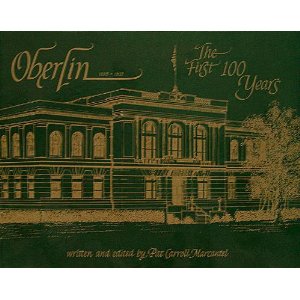
With the above quoted and hopefully intriguing you, here is my take on the beast of writer's block. Non-fiction is much easier than fiction. In the only book I have ever had published, writer's block wasn't a factor. This is what I've concluded as to why I escaped: my book was on the history of Oberlin, LA, my home town. It was a collection of chapters practically written by the people I interviewed. The main creativity I had to call upon was the beginning and ending chapters, and the structure of the book itself. The rest was making each story as well put-together as I possibly could. Oh, and of course, finding an artist who could illustrate it, an expert calligrapher for the cover and beginning of each chapter, a reliable typesetting company and a publisher was at times daunting.

One thorny problem did appear in the writing. I had to get the "fog" factor cleared up and see that the comprehension level was at that of newspapers--sixth grade. It was drudgery. As one of my sons told me early in the writing: "You're going to have to get rid of these complex and compound-complex sentences! By the end of some of them, I've already forgotten what you were talking about!" (So much for my--I hope-former Victorian style of writing). I soldiered on for four months and sent the book to the typesetting company who then sent it on to the publisher. The Oberlin Chamber of Commerce paid for the publishing. The people of Oberlin and many others in Allen Parish were pleased with Oberlin, the First 100 Years and it went into a second printing.

Other writings of mine are poems, articles and short stories, all based on either experiences from my life or my reading. Some have been published and some have won awards--no not the Pulitzer--just teeny awards but I am thankful for them. They encourage. I have a children's book that is written and 1/3 illustrated. My artist's block is far worse than any writer's block. I currently have two blogs I maintain which are both running commentaries on politics, life and the Lord. These keep me writing almost every day and that's a great thing for any writer. Visit me HERE and HERE.

Any last words? Of course--each a suggestion to overcome WB from that "blocky book": TATTOO, WAITING, SHORT FUSE, HOMELESS, 9/11, SEDUCTION, BAD HAIR DAY...

Now WRITE!

Artist/Author Pat Marcantel can be found on Facebook and Twitter any day of the week. When she isn't chatting online with friends, she's penning humorous stories that win contests. She's the author of Oberlin: The First 100 Years. If you'd like a copy, contact Pat.